
Shivneri
Shivneri Fort – Birthplace of Chhatrapati Shivaji Maharaj
Rising proudly atop a rugged hill near Junnar in Maharashtra, Shivneri Fort is a magnificent stronghold steeped in history, valor, and cultural pride. This triangular hill fort, encircled by steep cliffs and formidable defenses, is revered as the birthplace of Chhatrapati Shivaji Maharaj, the legendary founder of the Maratha Empire. With its strategic architecture, breathtaking views, and profound historical importance, Shivneri Fort stands as a must-visit destination for history enthusiasts, trekkers, and explorers alike.
History
Shivneri Fort dates back to the 6th century and has played a vital role in Maharashtra’s historical narrative. Originally built as a strategic military outpost, the fort came under the control of various dynasties before becoming a stronghold of the Bhosale family.
Recognizing its exceptional security, Shahaji Bhosale ensured that his wife Rajmata Jijabai stayed within the fort during her pregnancy. It was here, on February 19, 1630, that Chhatrapati Shivaji Maharaj was born.
Shivaji Maharaj spent his early childhood at Shivneri, where he was deeply influenced by his mother Jijabai. Under her guidance, he learned the principles of justice, governance, warfare, and devotion, which later shaped his vision of Swarajya (self-rule). Shivneri thus holds immense emotional and historical significance as the cradle of a leader who transformed Indian history.
Architecture
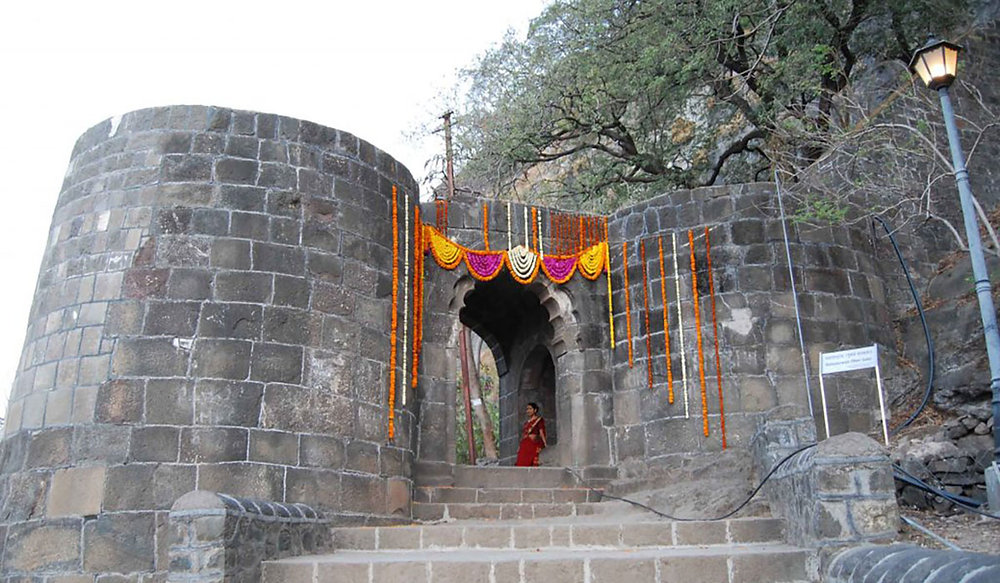
Shivneri Fort is a brilliant example of medieval military engineering, designed to withstand prolonged sieges and ensure the safety of its inhabitants. One of its most remarkable features is the seven-tiered fortification system, where each massive gate acts as a defensive barrier, forcing attackers to exhaust themselves at every level.
The fort is equipped with an efficient water management system, including large reservoirs like Badami Talav and the perennial Ganga–Jamuna springs, which still supply water today—highlighting the fort’s self-sustaining design.
At the heart of the fort lies the birthplace of Shivaji Maharaj, marked by a simple stone structure that holds immense reverence. Nearby stands a powerful statue of Rajmata Jijabai with young Shivaji, symbolizing her pivotal role in shaping his destiny. Another important landmark is the Shivai Devi Temple, from which the fort derives its name. Devotees believe Goddess Shivai blessed Shivaji Maharaj, guiding him toward greatness.
Hidden passages, towering bastions, and watchtowers further demonstrate the fort’s tactical brilliance, making Shivneri not just a military marvel but a sacred site in Maratha history.
Experience for Visitors
A visit to Shivneri Fort offers a perfect blend of history, adventure, and natural beauty. The trek to the fort is moderate and well-laid, making it suitable for beginners as well as experienced trekkers. The trail winds through rocky terrain and green slopes, gradually revealing stunning views of the Sahyadri ranges.
Exploring the fort feels like walking through a living museum. The seven fortified gates stand tall as symbols of resilience, while ancient structures whisper stories of courage and determination. Visitors can see the stone cradle where Shivaji Maharaj was placed as an infant, along with remnants of armories, granaries, and administrative spaces that reveal how the fort sustained itself during sieges.
The elevated vantage points offer spectacular views of Junnar and the surrounding valleys, emphasizing the fort’s strategic location. For photographers, history lovers, and spiritual seekers, Shivneri provides a deeply enriching experience.
One of the most special times to visit is during Shivaji Jayanti (February 19). The fort comes alive with cultural programs, traditional music, historical reenactments, and celebrations that honor the legacy of the great Maratha king.
Best Time to Visit
- Winter (October–February): The best season to visit, with cool weather, clear skies, and ideal trekking conditions.
- Monsoon (June–September): The fort transforms into a lush green paradise with misty views and small waterfalls. Trek carefully, as paths can be slippery.
- Summer (March–May): Warm temperatures make early-morning or late-afternoon visits preferable to avoid the heat.
Each season adds a unique charm, ensuring a memorable experience year-round.
How to Reach
Shivneri Fort is well-connected and easy to reach.
- By Road:
- Pune to Shivneri – ~90 km
- Mumbai to Shivneri – ~150 km
State transport buses, private cabs, and self-driving options are available to Junnar, from where the fort is just 2–3 km away.
- By Train:
Pune Junction is the nearest major railway station. From there, buses or taxis can take you to Junnar. - By Air:
Pune International Airport is the nearest airport. Taxis and buses are easily available to reach Junnar.
The journey itself is scenic, passing through the Sahyadri ranges, with winding roads, greenery, and refreshing mountain air.
Nearby Places to Explore
- Lenyadri Caves (5 km) – Ancient Buddhist caves housing the Girijatmaj Ashtavinayak Temple
- Ozar & Ranjangaon Temples (10 km) – Revered Ashtavinayak pilgrimage sites
- Junnar Caves (6 km) – 2,000-year-old Buddhist rock-cut caves
- Malshej Ghat (30 km) – Misty hills, waterfalls, and rich biodiversity
- Naneghat (35 km) – Historic trade route and popular trekking destination
These nearby attractions enhance the overall experience, offering a blend of spirituality, history, and nature.
Why You Must Visit Shivneri Fort
Shivneri Fort is not merely a historical monument—it is the birthplace of a legend and a symbol of Maharashtra’s pride and resilience. Walking through its gates is like stepping into the origins of the Maratha Empire.
Whether you are a history lover, trekker, spiritual seeker, or cultural explorer, Shivneri Fort offers an experience that is both humbling and inspiring. It is a place where history breathes, courage echoes, and legacy lives on.
Visit Shivneri Fort to walk the paths where a great king took his first steps and witness the foundation of Swarajya.

Recent Posts

Kailas Fort || Mulshi Dam View Point
Lohagad
Pratapgad
All Categories

Thailand