

Lohagad
Lohagad Fort – The Timeless Iron Fortress of the Sahyadris
Rising proudly in the Sahyadri mountain range of Maharashtra, Lohagad Fort stands as an awe-inspiring symbol of India’s rich historical legacy. Perched at an elevation of 1,033 meters (3,389 feet) above sea level, this magnificent stronghold—aptly named the “Iron Fort”—is a perfect blend of natural beauty and architectural brilliance. With centuries of history etched into its stone walls and panoramic views stretching across lush valleys, Lohagad remains one of the most beloved forts for trekkers, history lovers, and nature enthusiasts alike.
History
Lohagad Fort’s history spans more than a millennium, making it one of Maharashtra’s most historically layered forts. Originally established during the Lohtamia dynasty in the 10th century CE, the fort’s strategic location soon made it a prized possession for successive rulers. Over the centuries, it came under the control of the Chalukyas, Rashtrakutas, Yadavas, Bahamanis, Nizams, Mughals, and Marathas, each contributing to its evolving legacy.
In 1648 AD, Chhatrapati Shivaji Maharaj captured Lohagad, recognizing its immense strategic value. However, following the Treaty of Purandar (1665), he was compelled to hand it over to the Mughals. True to his indomitable spirit, Shivaji Maharaj reclaimed the fort in 1670 AD and transformed it into a treasury vault, storing the immense wealth acquired from his victorious Surat campaign.
During the Peshwa era, the fort served as a refuge for the renowned statesman Nana Phadnavis, who commissioned the construction of important structures, including a large water tank and step-well—both of which still stand today.
Adding a fascinating spiritual dimension to its history, an ancient Jain Brahmi inscription, dating back to the 2nd–1st century BC, was discovered in 2019 on the fort’s southern face. This discovery suggests the presence of an ancient Jain rock-cut sanctuary, revealing Lohagad’s significance long before its military prominence.
Architecture
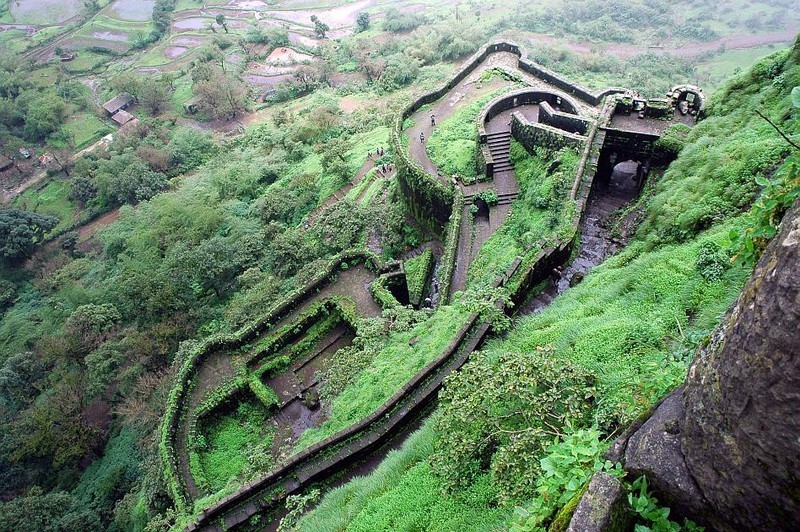
Lohagad Fort showcases remarkable military architecture, designed for strength, endurance, and strategic dominance. The fort is protected by four massive gateways—Ganesh Darwaja, Narayan Darwaja, Hanuman Darwaja, and Maha Darwaja—each standing as a silent witness to centuries of conflict and resilience. The craftsmanship seen in their stonework and carvings reflects the advanced engineering skills of ancient builders.
The fort’s most iconic feature is the Vinchukada, or “Scorpion’s Tail”—a long, narrow, fortified ridge extending dramatically from the main fort. Shaped like a scorpion’s sting, this natural rock formation offers breathtaking views of the surrounding valleys and hills. Walking along Vinchukada is both thrilling and awe-inspiring, making it a favorite among photographers and adventure seekers.
Experience for Visitors
Lohagad Fort offers one of the most accessible and rewarding trekking experiences in Maharashtra. The most popular trekking route starts from Malavli Railway Station, around 10 kilometers away, and takes approximately 2–3 hours to complete. The trail passes through lush landscapes and the ancient Bhaja Caves, adding cultural richness to the journey.
For those seeking a more relaxed experience, a motorable road from Lohagadwadi village leads almost up to the fort’s base, allowing visitors of all ages to explore the fort comfortably.
Once atop the fort, visitors are rewarded with expansive views of the Sahyadris, historic ruins, serene water tanks, and cool mountain breezes—creating an experience that is both peaceful and exhilarating.
Best Time to Visit
- October to March: The best time to visit, with pleasant weather, clear skies, and lush post-monsoon greenery.
- Monsoon (June–September): The fort transforms into a green paradise with flowing streams and misty hills, though trails can be slippery and require caution.
- Summer (April–May): Hot and humid; early morning or late evening visits are recommended.
For the most magical experience, visit during sunrise or sunset, when golden light bathes the fort and the surrounding hills in stunning hues.
How to Reach
Lohagad Fort is well connected and easy to reach:
- By Road:
- Mumbai → Lohagad: ~100 km
- Pune → Lohagad: ~60 km
Take the Mumbai–Pune Expressway to Lonavala, then proceed to Malavli or Lohagadwadi.
- By Train:
- Malavli Railway Station (5 km) – closest
- Lonavala Railway Station (10 km) – major stop
From either station, taxis or a short trek lead to the fort.
- By Air:
- Pune International Airport (~70 km)
- Mumbai International Airport (~100 km)
Continue by road or train to Lonavala/Malavli.
Nearby Places to Explore
- Bhaja Caves (2 km): Ancient Buddhist rock-cut caves from the 2nd century BC
- Visapur Fort: A higher and more challenging twin fort with panoramic views
- Karla Caves: Magnificent chaityas and viharas near Lonavala
- Lonavala: Scenic hill station famous for viewpoints, waterfalls, and chikki
Combining Lohagad with these attractions makes for a perfect weekend escape filled with history and nature.
Why You Must Visit Lohagad Fort
Lohagad Fort is more than just a historical monument—it is a journey through time. From ancient dynasties and Maratha conquests to spiritual discoveries and natural wonders, the fort offers a deeply enriching experience. Whether you are trekking along its rugged paths, standing atop Vinchukada, or gazing across mist-covered valleys, Lohagad leaves you with a lasting sense of wonder and pride in Maharashtra’s heritage.
Step into history, breathe in the Sahyadris, and let Lohagad Fort tell you its timeless story.

One thought on “Lohagad”
Add a Comment Cancel reply
Recent Posts

Kailas Fort || Mulshi Dam View Point
Lohagad

Pratapgad
All Categories

Thailand
Great content! Keep up the good work!