
Pratapgad
Pratapgad Fort – Where Strategy Met Valor
Nestled deep within the rugged terrain of the Western Ghats, Pratapgad Fort stands as a timeless symbol of Maharashtra’s glorious history, courage, and military brilliance. Located about 24 kilometers from Mahabaleshwar, this majestic hill fort is a must-visit destination for history enthusiasts, adventure seekers, and nature lovers alike. Built in 1656 under the vision of Chhatrapati Shivaji Maharaj, Pratapgad is forever etched in history for one of the most defining battles of the Maratha Empire.
History
Pratapgad Fort was constructed on the orders of Chhatrapati Shivaji Maharaj to safeguard the strategically important Par Pass and to maintain control over the Nira and Koyna river valleys. However, the fort earned immortal fame on 10 November 1659, during the legendary Battle of Pratapgad.
It was here that Shivaji Maharaj, through extraordinary foresight and strategy, defeated Afzal Khan, the powerful general of the Bijapur Sultanate. This decisive victory was a turning point in Maratha history, establishing Shivaji Maharaj as a formidable leader and significantly strengthening the foundation of Swarajya.
Even today, the stones of Pratapgad echo tales of bravery, intelligence, and unyielding resolve, making it one of the most historically significant forts in Maharashtra.
Architecture
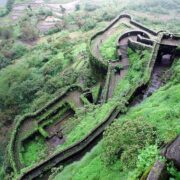
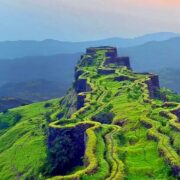
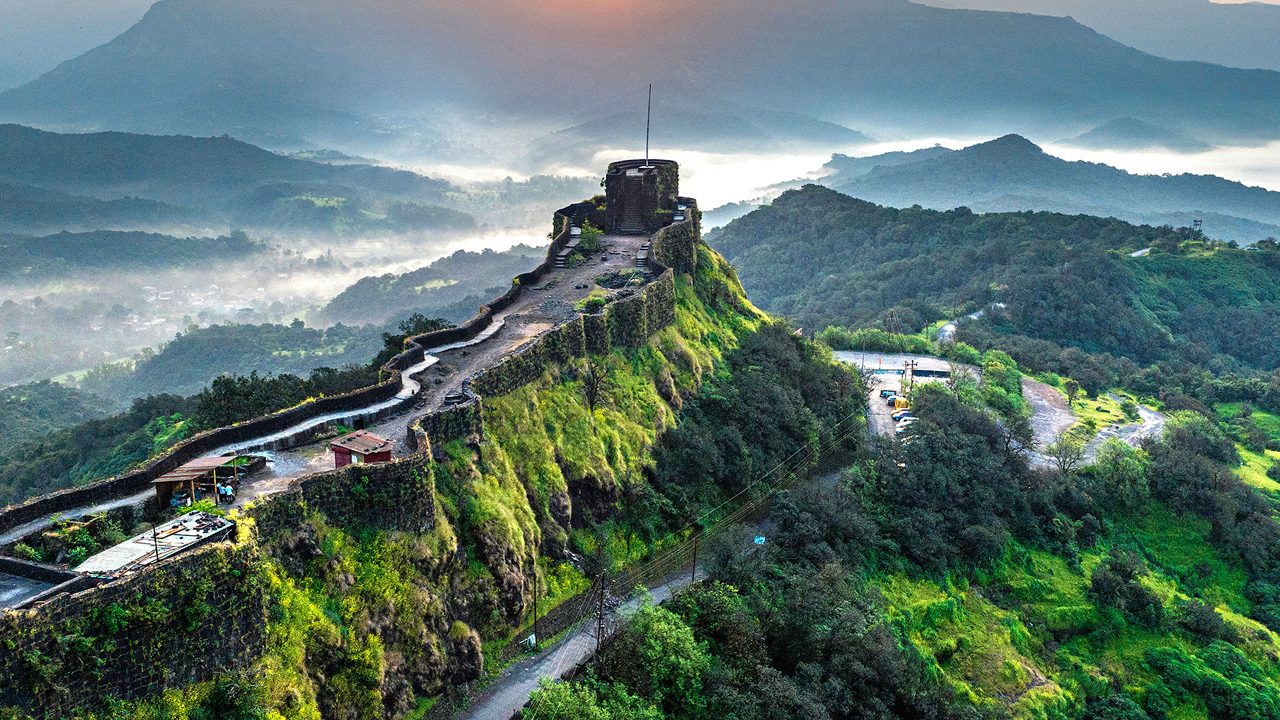
Pratapgad Fort is a brilliant example of strategic military architecture, seamlessly integrated with the natural defenses of the Sahyadri mountains. The fort is divided into two distinct sections—the Upper Fort and the Lower Fort, each designed with a specific defensive purpose.
Situated at an altitude of approximately 1,080 meters, the Upper Fort served as the main observation and defense point. Its strong bastions and thick stone walls offered commanding views of the surrounding valleys, allowing Maratha soldiers to monitor enemy movements from great distances. Today, this vantage point rewards visitors with breathtaking panoramic views of the Western Ghats.
The Lower Fort, built along the hill slopes, played a crucial role in protecting the inner fortifications. Equipped with multiple bastions, hidden escape routes, and secret pathways, it exemplifies the strategic genius of Maratha fort builders. These design elements enabled swift counterattacks and ensured Pratapgad remained a nearly impenetrable stronghold.
Together, both sections showcase the fort’s architectural brilliance and military strength, making Pratapgad a masterpiece of Maratha engineering.
Experience for Visitors
A visit to Pratapgad Fort is a captivating blend of history, spirituality, adventure, and scenic beauty.
One of the most revered landmarks here is the Bhavani Temple, where it is believed that Shivaji Maharaj received the legendary Bhavani sword, a weapon closely associated with his heroic victories. Nearby stands Afzal Khan’s Tomb, marking the site of one of the most dramatic episodes in Indian history.
Entering through the massive Mahadarwaja (Main Gate), visitors are immediately struck by the fort’s formidable defenses. As you explore the fort, its watchtowers and bastions offer sweeping views of dense forests, deep valleys, and rolling hills.
The journey to Pratapgad itself is equally thrilling. Winding roads and trekking paths cut through lush greenery, making the trip a delight for trekkers and nature lovers. After exploring, visitors can savor authentic Maharashtrian cuisine—from spicy Misal Pav to rustic Pithla Bhakri and crispy Bhajis—served by local vendors near the fort.
Whether you seek historical insight, adventure, or spiritual tranquility, Pratapgad Fort delivers an unforgettable experience.
Best Time to Visit
- Winter (October–February): The best time to visit, with cool weather, clear skies, and excellent visibility.
- Monsoon (June–September): The fort transforms into a misty green paradise. While visually stunning, trails can be slippery and require caution.
- Summer (March–May): Hot during the day; early mornings and late afternoons are ideal for exploration.
Each season offers a unique charm, but winter remains the most comfortable for sightseeing.
How to Reach
Pratapgad Fort is well connected and easily accessible:
- By Air:
The nearest airport is Pune International Airport (~120 km). From Pune, taxis and buses are available to Mahabaleshwar, followed by a short drive to the fort. - By Train:
Wathar Railway Station (~60 km) is the nearest railhead. From there, buses and cabs connect to Mahabaleshwar and Pratapgad. - By Road:
- Pune to Pratapgad: ~3–4 hours
- Mumbai to Pratapgad: ~5–6 hours
The route via NH66 offers scenic views of forests, ghats, and rolling hills. From Mahabaleshwar, the fort is just 24 km away.
The journey through misty hills and dense forests is an experience in itself.